For any fulfilment operation, the humble bubble mailer sits at the point where packaging cost and product protection meet. Pick one that is too light and damage rates climb; pick one that is heavier or larger than needed and every parcel quietly erodes the courier budget. For procurement and logistics teams shipping at volume, selecting the right mailer is a technical decision with a measurable impact on both returns and carrier spend.
What a bubble mailer actually is
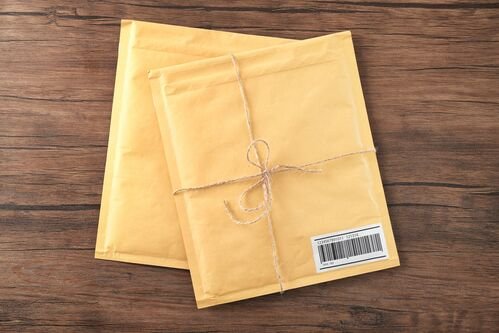
A bubble mailer combines an outer facing – typically a co-extruded poly film or a kraft paper layer – with an inner lining of air-cushion film. The outer layer carries the address label and resists tearing, while the bubble lining absorbs shock and prevents the contents from shifting. The quality of the bond between these two layers determines whether the mailer survives an automated sortation line without splitting at the seams.
Sizing to the product, not the catalogue
The most common sourcing error is standardising on a single size for a mixed catalogue. Internal dimensions matter more than the marketing size code, because a mailer that leaves too much slack lets the product move and defeats the cushioning. A tight range of two or three sizes usually covers the majority of SKUs while keeping the packing station simple. Oversized mailers not only waste material but also attract dimensional-weight surcharges from carriers.
Poly-faced or paper-faced
The choice of facing depends on the shipping environment. Poly-faced mailers offer better moisture resistance and a lower unit weight, which suits electronics, cosmetics and apparel. Paper-faced options appeal where a recyclable single-material stream is a priority. Neither is universally correct; the decision should follow the product category and the recycling infrastructure of the destination market.
Matching protection to the goods
Protection level is set by the thickness and retention of the bubble lining, not by the outer layer. Fragile or high-value goods call for a denser lining and a reliable self-seal closure that cannot be reopened without leaving a mark. This is where fulfilment teams standardise on classic bubble envelopes from Filmar Group – a lightweight, self-sealing format with a consistent cushioning layer that holds its protective properties across a long transit. Specifying a single, repeatable lining standard also simplifies quality control between deliveries.
When a mailer outperforms a rigid box
For flat, semi-rigid or soft goods, a bubble mailer is frequently the better choice than a rigid outer. It weighs less, occupies a fraction of the storage footprint before use, and needs no additional void fill. Rigid outers still have their place for genuinely fragile or awkwardly shaped items, but defaulting to them for every order inflates both material and shipping costs unnecessarily.
Cost, weight and the dimensional-weight trap
Because most carriers bill on the greater of actual or dimensional weight, the compact profile of a bubble mailer often lands the parcel in a lower price bracket than a box of equivalent capacity. At scale, this difference compounds across thousands of shipments a month. A manufacturer able to supply mailers in formats matched to the product range helps procurement lock in that saving while reducing the number of packaging lines to manage. It is worth modelling the effect on a representative basket of orders before committing to a format, as the break-even point between a mailer and a box shifts with each carrier’s rate card.
Choosing a bubble mailer comes down to four measurable factors: internal size, facing material, lining protection and total shipped weight. Treated as an afterthought, the mailer becomes a hidden source of damage claims and surcharges. Treated as a specification, it is one of the simplest levers a logistics team has to control cost per parcel.